

As Roof Estimate Guide: How Contractors Calculate Roofing Costs takes center stage, this opening passage beckons readers with casual formal language style into a world crafted with good knowledge, ensuring a reading experience that is both absorbing and distinctly original.
Understanding the intricate process behind how contractors calculate roofing costs is essential for anyone embarking on a roofing project. From materials to labor, each component plays a crucial role in determining the final estimate. Let's delve deeper into this fascinating world of roofing cost calculations.
Roofing Cost Components
When contractors calculate roofing costs, they take into account several key elements that contribute to the overall estimate. These components include materials, labor, permits, and overhead costs. Understanding how these factors impact the cost estimation can help homeowners make informed decisions when planning for a roof replacement or repair.
Materials
Materials play a significant role in determining the cost of a roofing project. Different roofing materials vary in price, durability, and aesthetic appeal. For example, asphalt shingles are a popular and cost-effective option, while metal roofing is more durable but comes at a higher price point.
Contractors consider the quality and quantity of materials needed to complete the project when preparing the estimate.
Labor
Labor costs are another crucial component of roofing estimates. The amount of labor required for a roofing project depends on factors such as the size of the roof, complexity of the design, and the skill level of the workers. Contractors factor in the cost of labor based on the estimated hours needed to complete the job.
Permits
Obtaining permits for a roofing project is often necessary and comes with associated costs. Contractors must consider the fees for permits when calculating the overall estimate. Permit costs can vary depending on the location and the scope of the project, so it is essential to include this expense in the budget.
Overhead Costs
In addition to materials, labor, and permits, contractors include overhead costs in their estimates. Overhead costs encompass expenses such as insurance, equipment maintenance, and administrative fees. These costs are essential for running a roofing business and are factored into the overall pricing to ensure the contractor can cover all necessary expenses.
Impact of Different Roofing Materials
The choice of roofing material can have a significant impact on the overall cost estimation. While asphalt shingles are more affordable upfront, they may require more frequent repairs and replacements compared to metal or slate roofing. Homeowners should consider the long-term maintenance and durability of different materials when deciding on the best option for their roof.
Roof Measurement Methods
When it comes to accurately calculating roofing costs, one of the crucial steps is measuring the roof size correctly. Contractors use various methods to achieve this, taking into account factors like roof slope, complexity, and pitch to ensure an accurate estimation.
Measuring Roof Size
Contractors typically use two main methods to measure roof size: the square footage method and the slope method. The square footage method involves measuring the length and width of each roof section and multiplying these dimensions to determine the total area.
On the other hand, the slope method considers the pitch of the roof and calculates the total area based on the slope.
Influence of Roof Slope and Complexity
The roof slope plays a significant role in the estimation process, as steeper slopes often result in more complex roofing systems and higher costs. Additionally, roofs with multiple angles, dormers, or skylights add complexity to the measurement process, requiring more detailed calculations for an accurate estimate.
Importance of Precise Measurements
Accurate measurements are essential for generating a reliable roof estimate. Even small errors in measurements can lead to significant discrepancies in cost projections, potentially causing delays or budget overruns. By using precise measurement methods and considering factors like roof slope and complexity, contractors can provide more accurate estimates to their clients.
Labor Cost Calculation
When it comes to determining labor costs for a roofing project, contractors take several factors into consideration. Factors such as the expertise and experience of the roofing crew play a significant role in estimating labor costs
Local labor rates also play a crucial role in labor cost calculations. Labor rates can vary significantly depending on the location of the project, with urban areas typically having higher labor costs compared to rural areas.The size and duration of the roofing project can also influence labor cost estimates.
Larger projects that require more time and manpower will naturally incur higher labor costs compared to smaller, quicker projects.
Impact of Expertise and Experience
Contractors often factor in the expertise and experience of their roofing crew when calculating labor costs. Highly skilled workers may be able to complete the project more efficiently, potentially reducing labor costs in the long run.
Local Labor Rates
Local labor rates can greatly impact labor cost estimates for a roofing project. Contractors must consider the prevailing wages in the area where the project is located to provide accurate labor cost calculations.
Size and Duration of Project
The size and duration of a roofing project are key factors in determining labor costs. Larger projects that require more time and manpower will naturally have higher labor costs compared to smaller, quicker projects.
Additional Cost Factors
When it comes to calculating roofing costs, contractors need to consider various additional factors that can impact the overall estimate. These supplementary costs play a crucial role in determining the final price of the roofing project.
Equipment Rentals
Equipment rentals are often included in the roofing estimate, especially for specialized tools or machinery required for the job. Contractors need to factor in the cost of renting equipment such as cranes, scaffolding, or safety gear when providing an accurate estimate to the client.
Disposal Fees
Disposal fees are another important consideration in roofing cost estimation. Contractors need to account for the costs associated with removing and disposing of old roofing materials, debris, and waste generated during the project. This includes fees for waste disposal sites or recycling facilities.
Unforeseen Damages
Unexpected expenses can arise during a roofing project due to unforeseen damages or complications that were not initially accounted for in the estimate. These can include issues like structural damage, mold remediation, or repairs to underlying roof components. Contractors need to have a contingency plan in place to address such unforeseen costs without significantly impacting the overall budget.
End of Discussion
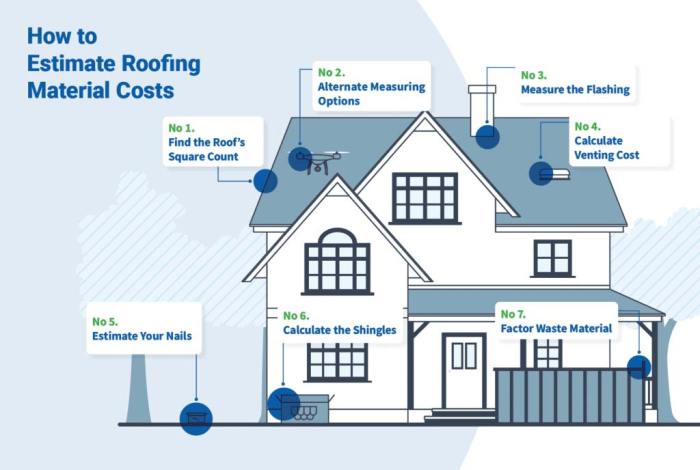
In conclusion, the art of estimating roofing costs is a complex dance of various factors that contractors carefully consider. From material choices to labor calculations, every detail impacts the final figure. Armed with this knowledge, you're now better equipped to navigate the realm of roofing estimates with confidence and insight.
FAQ Explained
What factors influence the cost of roofing materials?
Roofing material costs can vary based on factors such as quality, durability, and availability. Additionally, the type of material chosen, whether it's asphalt shingles, metal, or tiles, can significantly impact the overall cost of the project.
How do contractors account for unforeseen damages in their roofing estimates?
Contractors typically include a buffer in their estimates to cover unforeseen damages that may arise during the project. This buffer helps ensure that unexpected costs can be managed without significantly impacting the overall budget.
What role does roof slope play in estimating roofing costs?
Roof slope affects the amount of materials needed and the complexity of installation, which can influence the overall cost. Steeper slopes may require additional safety measures and specialized equipment, leading to higher labor costs compared to roofs with minimal slope.

